The Names We Carry
Abraham wasn’t a Jew. The word didn’t exist yet.
In his day there was no such word as “Jew.” He was Avram ha-Ivri — Abraham the Hebrew.
1/3The spark
The Torah never once calls Abraham a Jew. He is Avram ha-Ivri — Abraham the Hebrew, “the one from the other side.” Generations later Joseph still calls himself a Hebrew, and so does Egypt around him.
2/3The spark
For most of the Torah the people are Bnei Yisrael, the Children of Israel — Israelites — named for Jacob. “Jew” — Yehudi — is a far later word. It begins as the name of one of Jacob’s sons, Judah; becomes a tribe, then a southern kingdom; and around the Babylonian exile and after, it broadens into a name for the whole people.
3/3The spark
Later the Sages heard in the name something beyond birth: in their reading, a Yehudi is anyone who refuses idolatry. The inherited name gains a second life as a spiritual one too — a way of standing before God — without ceasing to be the name of a people you are born into or join.
Where this comes from
In Judaism this rests on the texts themselves. Here are the receipts — look them up.
1/5Where this comes from
Genesis 14:13
Then a fugitive came and told Abram the Hebrew.
The original Hebrew
וַיָּבֹא הַפָּלִיט וַיַּגֵּד לְאַבְרָם הָעִבְרִי
Go deeper
The Torah’s first label for Abraham is ha-Ivri — “the Hebrew,” traditionally read as “the one from the other side,” who crossed over. Joseph too calls himself a Hebrew (Genesis 40:15), and Potiphar’s household calls him “this Hebrew” (Genesis 39:14). The word “Jew” is nowhere in their world — yet the tradition still holds Abraham as the founding father of the people, the first to enter God’s covenant. The name is younger than the man; the lineage is not in doubt.
2/5Where this comes from
Bereshit Rabbah 42:8
Rabbi Yehuda said: the whole world was on one side, and he was on the other side.
The original Hebrew
רַבִּי יְהוּדָה אוֹמֵר כָּל הָעוֹלָם כֻּלּוֹ מֵעֵבֶר אֶחָד וְהוּא מֵעֵבֶר אֶחָד
Go deeper
Why ha-Ivri, “the Hebrew”? The plain sense is geographic — ever is a side or a bank, and Abraham is the one who came from across the river. But the Midrash hears a second meaning folded into the same word: the whole world stood on one side and Abraham on the other. Ivri becomes the name of a man willing to stand apart for what he knew — “the other side” turned from a place into a posture, long before it was ever a people’s name.
3/5Where this comes from
Genesis 29:35
She conceived again and bore a son and said, “This time I will praise the Lord”; so she named him Judah.
The original Hebrew
וַתַּהַר עוֹד וַתֵּלֶד בֵּן וַתֹּאמֶר הַפַּעַם אוֹדֶה אֶת־יְהֹוָה עַל־כֵּן קָרְאָה שְׁמוֹ יְהוּדָה
Go deeper
“Judah” — Yehudah, the source of Yehudi, “Jew” — is born from Leah’s cry odeh, “I will give thanks, I will praise.” Long before it named a people, it named gratitude. Later Jewish teaching can hear that thanksgiving folded inside the name Yehudi too.
4/5Where this comes from
II Kings 16:6
At that time Rezin king of Aram recovered Elath for Aram and drove the Judeans out of Elath.
The original Hebrew
בָּעֵת הַהִיא הֵשִׁיב רְצִין מֶלֶךְ־אֲרָם אֶת־אֵילַת לַאֲרָם וַיְנַשֵּׁל אֶת־הַיְּהוּדִים מֵאֵילוֹת
Go deeper
This is among the first times the word Yehudim appears in the narrative of Tanakh — and it still means simply “Judeans,” people of the kingdom of Judah, set against their neighbours. The wider sense we use today is not yet here; its scope broadens as Judah becomes the surviving center of Israelite life, through exile and return.
5/5Where this comes from
Megillah 13a
…for anyone who repudiates idolatry is called a Jew.
The original Hebrew
שֶׁכׇּל הַכּוֹפֵר בַּעֲבוֹדָה זָרָה נִקְרָא יְהוּדִי
Go deeper
Asked why Mordechai is called “a Jew” though he came from the tribe of Benjamin, not Judah, the Sages offer an aggadic reading — a homiletical deepening, not a rule of who counts as Jewish: the name Yehudi fits anyone who repudiates idols, they say, citing Daniel, where the exiles in Babylon who would not bow are called Yehuda’in. Alongside the name of a people, the word gains a spiritual resonance: a stance toward the one God.
The chain
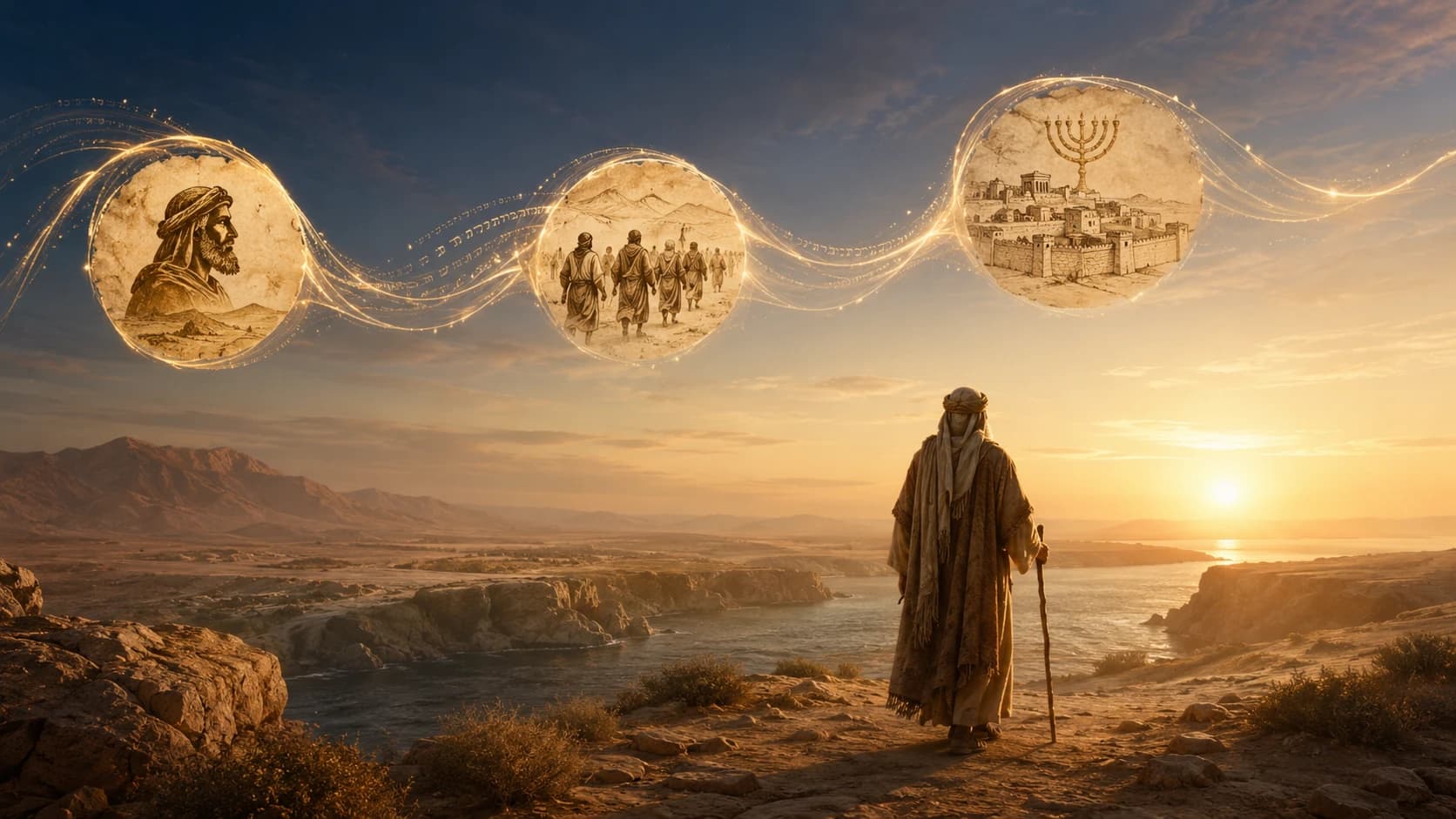
The name grew with the people — Abraham the Hebrew, then the Children of Israel, then, around the exile, the Jews. Three names, one unfolding story.
The name the world knows us by is younger than we are — and the tradition hears in it, beyond a bloodline, a refusal to bow to idols and a word for giving thanks.
Take it with you
One spark, its sources, ready for the group chat.
Abraham wasn’t a Jew — the word hadn’t been invented yet.