How the Tradition Thinks
The Torah never says it was an apple. It never names the fruit at all.
The Hebrew never gives the fruit a name. When the Sages later asked which tree it was, they answered grape, fig, wheat, even citron — never an apple.
01The spark
Genesis never names the forbidden fruit Adam and Eve ate. It says only that the tree was good for eating, and that she took of its fruit and ate. No species, no apple, appears anywhere in the Hebrew.
In fact the only plant the story names by species comes a verse later, and it isn’t the food. When their eyes are opened, the two sew together aleh te’enah, fig leaves, to cover themselves. The tree they ate from is left a blank the text never fills.
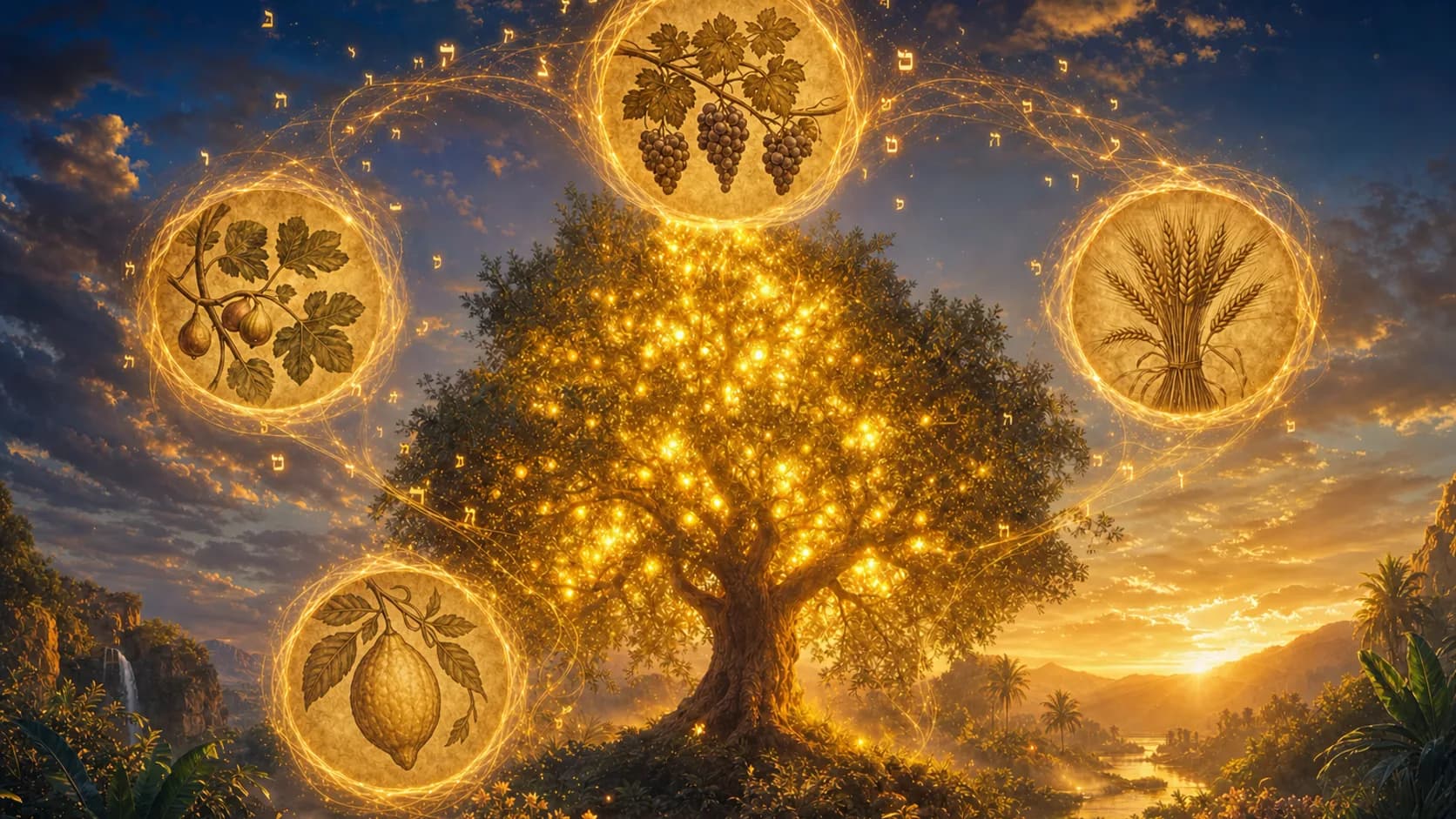
So the Sages went looking. The Talmud asks outright which tree it was, and three answers come back: Rabbi Meir says a grapevine, for nothing brings grief on a person like wine; Rabbi Nehemiah says a fig, since they were mended by the very leaves of the tree that ruined them; Rabbi Yehuda says wheat, for a child cannot call out “father” and “mother” until it has tasted grain. The Midrash adds a fourth, the etrog — the citron Jews still lift every Sukkot — the one tree, it says, whose wood tastes like its fruit. An apple is on none of these lists.
One of those answers echoes forward. The first thing Noah does after the flood is plant a vineyard, drink of its wine, and lie uncovered in his tent — and the Talmud hears God asking him: Noah, should you not have learned from the first man, whose undoing was nothing but wine? For the Sages who said grapevine, the two stories rhyme: the first man of the old world and the first man of the new, each undone by the same fruit.
And one voice in that Midrash refuses the game altogether: the Holy One never revealed which tree it was, and never will. For that teacher, the blank is not a riddle waiting to be solved — it is deliberate. The familiar apple grew elsewhere: in Latin, malum means “evil,” and the word for “apple” is written the same way — and as the story passed into Latin and its painters, that pun quietly did the naming the Hebrew had refused. A tradition this careful with a single word never had an apple to lose.
This rests on what came before
This leans on something you may have met — that in the Torah the meaning lives in the exact Hebrew. Read the Hebrew closely here and a familiar picture quietly dissolves: the words for the fruit are simply not there.
02Where this comes from
In Judaism this rests on the texts themselves. Here are the receipts — look them up.
Genesis 3:6
The woman saw that the tree was good for eating and a delight to the eyes, and desirable as a way to wisdom; and she took of its fruit and ate, and gave also to her husband beside her, and he ate.
The original Hebrew
וַתֵּרֶא הָאִשָּׁה כִּי טוֹב הָעֵץ לְמַאֲכָל וְכִי תַאֲוָה־הוּא לָעֵינַיִם וְנֶחְמָד הָעֵץ לְהַשְׂכִּיל וַתִּקַּח מִפִּרְיוֹ וַתֹּאכַל וַתִּתֵּן גַּם־לְאִישָׁהּ עִמָּהּ וַיֹּאכַל
Go deeper
The verse lavishes the tree with desire — “good for eating,” “a delight to the eyes,” “desirable for wisdom” — and then names the food with a single bare word: peri, “fruit.” Not an apple, not a fig, not anything. The Hebrew that is so exact about why she ate says nothing at all about what she ate.
Genesis 3:7
Then the eyes of both of them were opened, and they knew that they were naked; and they sewed fig leaves together and made themselves coverings.
The original Hebrew
וַתִּפָּקַחְנָה עֵינֵי שְׁנֵיהֶם וַיֵּדְעוּ כִּי עֵירֻמִּם הֵם וַיִּתְפְּרוּ עֲלֵה תְאֵנָה וַיַּעֲשׂוּ לָהֶם חֲגֹרֹת
Go deeper
The one plant the entire episode names is the fig — and not as the forbidden food, but as the covering they reach for after. That single detail is what one Sage will later seize on to argue the tree itself was a fig: they were set right, he says, by the very leaves of the thing that undid them. The text names the bandage, never the wound.
Berakhot 40a
The tree from which the first man ate — Rabbi Meir says it was a grapevine … Rabbi Nehemiah says it was a fig … Rabbi Yehuda says it was wheat.
The original Hebrew
אִילָן שֶׁאָכַל מִמֶּנּוּ אָדָם הָרִאשׁוֹן, רַבִּי מֵאִיר אוֹמֵר: גֶּפֶן הָיָה … רַבִּי נְחֶמְיָה אוֹמֵר: תְּאֵנָה הָיְתָה … רַבִּי יְהוּדָה אוֹמֵר: חִטָּה הָיְתָה
Go deeper
Asked which tree it was, the Sages give three readings, each tied to the text. Rabbi Meir says a grapevine — nothing brings wailing on a person like wine. Rabbi Nehemiah says a fig, reading it straight out of the next verse: they were mended by the very leaves that exposed them. Rabbi Yehuda says wheat — for the tree was of knowledge, and a child cannot call out “father” and “mother” until it has tasted grain. Three Sages, three trees, all argued from the verses. And when a student later pressed the wheat answer — the verse says tree — the Midrash records Rabbi Ze’ira’s reply: in Eden the wheat towered like the cedars of Lebanon. None of them reaches for an apple.
Sanhedrin 70a
The Holy One said to Noah: Noah, should you not have learned from the first man, whose undoing was caused by nothing but wine? — according to the one who says that the tree from which the first man ate was a grapevine.
The original Hebrew
אָמַר לוֹ הַקָּדוֹשׁ בָּרוּךְ הוּא לְנֹחַ: נֹחַ, לֹא הָיָה לְךָ לִלְמוֹד מֵאָדָם הָרִאשׁוֹן שֶׁלֹּא גָּרַם לוֹ אֶלָּא יַיִן? כְּמַאן דְּאָמַר אוֹתוֹ אִילָן שֶׁאָכַל מִמֶּנּוּ אָדָם הָרִאשׁוֹן – גֶּפֶן הָיָה
Go deeper
The verse under discussion is Genesis 9: Noah, the first man of the world after the flood, plants a vineyard before anything else, drinks of the wine, and is uncovered in his tent — desire, eating, exposure, the same sequence as Eden. The Talmud makes the echo explicit, imagining God pointing Noah back to Adam. For the school that said grapevine, this is no coincidence: it is the same lesson, given twice.
Bereshit Rabbah 15:7
Rabbi Abba of Akko said: it was a citron, as it is written, “And the woman saw that the tree was good…” — go out and see which tree’s wood is eaten like its fruit, and you find none but the citron.
The original Hebrew
רַבִּי אַבָּא דְּעַכּוֹ אָמַר אֶתְרוֹג הָיָה, הֲדָא הוּא דִּכְתִיב: וַתֵּרֶא הָאִשָּׁה כִּי טוֹב הָעֵץ וגו׳, אֲמַרְתְּ צֵא וּרְאֵה אֵיזֶהוּ אִילָן שֶׁעֵצוֹ נֶאֱכָל כְּפִרְיוֹ, וְאֵין אַתָּה מוֹצֵא אֶלָּא אֶתְרוֹג
Go deeper
Rabbi Abba reads the verse with a jeweler’s eye: it says the tree — not its fruit — was good for eating, so he looks for a tree whose very wood shares the taste of its fruit, and finds only the etrog, the citron Jews still lift every Sukkot. And the same Midrash closes on a refusal: one teacher holds the Holy One never revealed the species, and never will — concealed then and forever, so the tree could never be pointed at and shamed. The blank in Genesis is not an oversight; it is kept on purpose.
The chain
From the bare word peri in Genesis, to the fig leaves a verse later, to the Sages weighing grape, fig, and wheat, to Noah’s vine carrying the lesson forward, to Rabbi Abba’s etrog — candidate after candidate argued from the verses, while the Midrash holds the true answer was never revealed at all.
03The turn
Take away the apple and nothing is lost. The Hebrew never spent a word on the fruit because the fruit was never the point. The species was left blank, so the question handed to you is not which fruit it was, but what it meant to reach for what God had forbidden — and what that reaching changed.
04Take it with you
One spark, its sources, ready for the group chat.
The Torah never says it was an apple — it never names the fruit at all.