The Shape of the Covenant
Judaism isn’t a religion. It’s a nation with a calling.
Before it is anything you believe, Judaism is a people you are born into or join — a people bound to God by covenant, and through that covenant charged to carry a blessing to the whole earth.
01The spark
The word “religion” names a portable set of beliefs and rituals you can adopt or leave — a private matter between the single soul and its God. Judaism predates that category and never sat neatly inside it: it began not as a creed but as a people, and a people is a different kind of thing. A covenant with a nation touches everything a nation is — its land, its law, its calendar, its public square — not only the chamber of the heart.
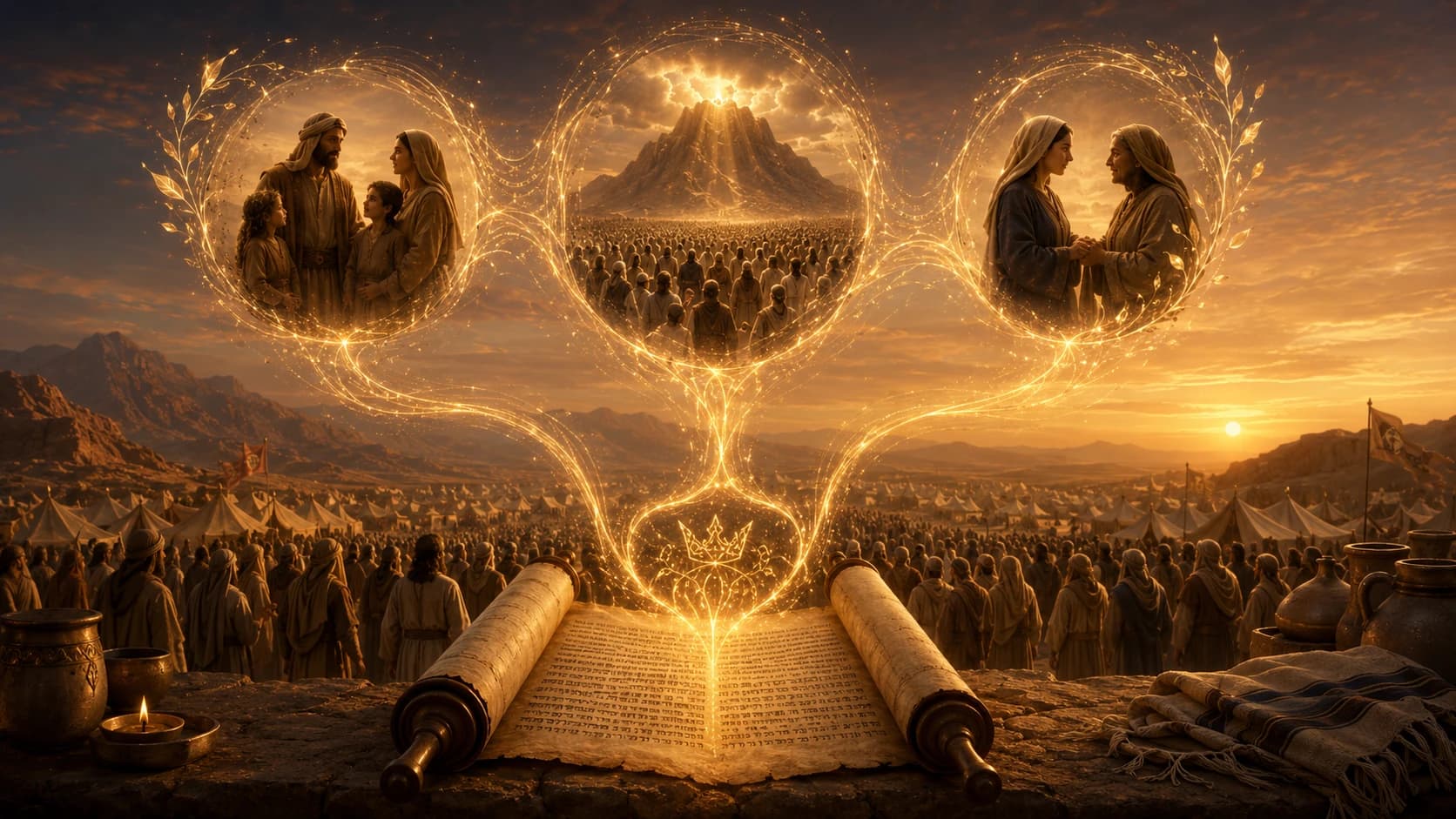
A people was promised before any law was given. When God calls Abraham, the words are national: “I will make you a great nation” — goy gadol, not a great religion — with a land to live it in: “the land that I will show you.” And in the next breath the blessing turns outward: “through you all the families of the earth shall be blessed.” The nation and its calling to the world are born together.
That is why you don’t “convert” to Judaism the way you adopt a creed. You join a people and bind yourself to its God and its commandments at once — Ruth says it in a single breath: “your people shall be my people, and your God my God.” Belonging and faith come together, neither peeled from the other.
Nor is it mere bloodline. As Saadia Gaon wrote a thousand years ago, “our nation is a nation only by virtue of its Torah.” A people, a faith bound to God, and a calling toward the world — Rav Kook described these as three forces in the soul of Israel. Not a religion, not an ethnicity, not a race: a nation whose very being is its covenant and its task.
Then where did the label come from? Strikingly late. For most of history, even the peoples hosting the Jews treated them as exactly what they claimed to be — a nation in exile, with its own courts, calendar, and communal law. The re-filing came with modern citizenship: “To the Jews as a nation, nothing,” declared Clermont-Tonnerre in revolutionary France; “to the Jews as individuals, everything.” Emancipation was offered at the price of nationhood, and Judaism was recast as a private confession — a “religion” in the modern sense. The box most people reach for today was built scarcely two centuries ago.
02Where this comes from
In Judaism this rests on the texts themselves. Here are the receipts — look them up.
Genesis 12:1–3
The LORD said to Abram: Go forth from your land, from your birthplace, and from your father’s house, to the land that I will show you. And I will make you a great nation, and I will bless you, and make your name great, and you shall be a blessing. I will bless those who bless you, and the one who curses you I will curse; and through you all the families of the earth shall be blessed.
The original Hebrew
וַיֹּאמֶר יְהֹוָה אֶל־אַבְרָם לֶךְ־לְךָ מֵאַרְצְךָ וּמִמּוֹלַדְתְּךָ וּמִבֵּית אָבִיךָ אֶל־הָאָרֶץ אֲשֶׁר אַרְאֶךָּ. וְאֶעֶשְׂךָ לְגוֹי גָּדוֹל וַאֲבָרֶכְךָ וַאֲגַדְּלָה שְׁמֶךָ וֶהְיֵה בְּרָכָה. וַאֲבָרְכָה מְבָרְכֶיךָ וּמְקַלֶּלְךָ אָאֹר וְנִבְרְכוּ בְךָ כֹּל מִשְׁפְּחֹת הָאֲדָמָה.
Go deeper
At the very founding — before Sinai, before a single commandment — the promise to Abraham is cast as nationhood: goy gadol, “a great nation,” not a great faith or a great religion. And in the same breath the blessing turns outward, to “all the families of the earth.” The people and its task for the world are born together: a nation, and a nation for the sake of others.
Exodus 19:5–6
If you will truly listen to My voice and keep My covenant … you shall be to Me a kingdom of priests and a holy nation.
The original Hebrew
וְעַתָּה אִם־שָׁמוֹעַ תִּשְׁמְעוּ בְּקֹלִי וּשְׁמַרְתֶּם אֶת־בְּרִיתִי ... וְאַתֶּם תִּהְיוּ־לִי מַמְלֶכֶת כֹּהֲנִים וְגוֹי קָדוֹשׁ
Go deeper
Read the verse before the famous one and the order is set right: “if you keep My covenant” comes first. Israel’s nationhood is offered inside a covenant — and then God’s own word for this people is goy, “nation,” the same word used for any people on earth. Yet the phrase paired with it, “a kingdom of priests,” gives that nation a vocation: a priesthood turned outward, toward the world. Not a church and not a creed — a nation, set apart by holiness, bound by covenant, with a task beyond itself.
Deuteronomy 27:9
Be silent and hear, O Israel: this day you have become a people to the LORD your God.
The original Hebrew
הַסְכֵּת וּשְׁמַע יִשְׂרָאֵל הַיּוֹם הַזֶּה נִהְיֵיתָ לְעָם לַיהֹוָה אֱלֹהֶיךָ
Go deeper
Israel is not a people first and then, separately, given a religion. In one phrase Moses fuses the two: “this day you have become a people to the LORD your God” — a people, and a people belonging to God, in the same words. Becoming a nation and entering the bond with God are not two stages but one event. (Christian Bibles number this verse the same; the hinge is the Hebrew nih’yeta le-am, “you have become a people.”)
Ruth 1:16
Your people shall be my people, and your God my God.
The original Hebrew
עַמֵּךְ עַמִּי וֵאלֹהַיִךְ אֱלֹהָי
Go deeper
The Sages read Ruth the Moabite as a model of the convert — and her vow joins a people and its God in a single breath: “your people shall be my people, and your God my God.” To join Israel is to enter a people and take up its God and commandments together; belonging and faith come bound, neither peeled from the other. From her line, the tradition says, will come King David.
Yevamot 47b
“We are commanded six hundred and thirteen commandments” — “your people is my people”; “we are forbidden idolatry” — “your God is my God.”
The original Hebrew
מִפַּקְדִינַן שֵׁשׁ מֵאוֹת וּשְׁלֹשׁ עֶשְׂרֵה מִצְוֹת — עַמֵּךְ עַמִּי. אֲסִיר לַן עֲבוֹדָה זָרָה — וֵאלֹהַיִךְ אֱלֹהָי
Go deeper
Read alone, Ruth’s vow can sound like sentiment. The Sages hear it as a conversion: Naomi tells Ruth what joining Israel will mean — its commandments, its boundaries — and Ruth answers, clause by clause, by accepting them. “Your people is my people” is matched to “we are commanded six hundred and thirteen commandments”; “your God is my God” to “we are forbidden idolatry.” To join the people is, in the same breath, to take on its commanded life. Belonging and obligation are not two separate steps.
Emunot ve-De’ot, Third Treatise
For our nation, the Children of Israel, is a nation only by virtue of its Torah.
The original Hebrew
לְפִי שֶׁאֻמָּתֵנוּ בְּנֵי יִשְׂרָאֵל אֵינָהּ אֻמָּה אֶלָּא בְּתוֹרוֹתֶיהָ
Go deeper
Saadia Gaon, in tenth-century Babylon, guards against the opposite error — reducing Jews to a bloodline. Israel is a people, yes, but its endurance as a people is inseparable from the Torah it carries: the covenant is what gives that survival its meaning and obligation. Peoplehood and Torah are not two things to rank; they are one thing seen from two sides. That is exactly why “religion” — a creed you could peel off a people — is the wrong box. (Saadia wrote his Emunot ve-De’ot in Judeo-Arabic; the Hebrew here is its classic later translation.)
The chain
From Abraham to the Talmud to tenth-century Babylon, the same understanding: Israel is called as a nation and for a blessing, the convert joins the people and its God together, and Israel remains a people through the Torah it carries.
03The turn
Ask first “what do Jews believe?” and you have already misfiled the thing. The tradition’s own opening question is not what this people believes, but who they are — and what they are for. Franz Rosenzweig said it in one line: God did not create religion — He created the world.
04Take it with you
One spark, its sources, ready for the group chat.
Judaism isn’t a religion — it’s a nation with a calling.